VR Visual Field Guide
Glaucoma optic neuropathy has been affecting approximately 60 million people globally. With the rate expected to be doubled by 2040, people must receive medical attention before the disease advances. There is an urgent need for screening for the disease since blindness from glaucoma is avoidable with early detection. By mapping the visual fields of both eyes, visual field tests allow ophthalmologists to detect blind spots (scotomas) or any subtle areas of dim vision. It can diagnose scotoma’s size and shape and explains how eye disease or a brain disorder affects vision.
Check out our equipment spotlight!
Visual Field Perimetry
Most frequently, visual field testing is used for diagnosing glaucoma and signs of it damaging the optic nerve. It is a method to measure a patient’s entire scope of vision, including the patient’s central and peripheral vision. In the specialized settings of ophthalmology, doctors measure how much vision is in either eye and how much eyesight loss may have occurred over time. During sight examination, doctors measure the visual field by having the patient concentrate on a central point while looking straight ahead all the time to map accurately. Even modern testing devices can track for fixation monitoring or the ability of the patient to maintain a straight gaze consistently. The testing is performed one eye at a time, and the opposite eye is completely covered to prevent errors. Therefore, individuals must be familiar with testing instruction and fully coordinate and complete the visual field test to determine meaningful data.
Why Is A Visual Field Test Difficult To Administer?
A standard visual field test is the only way to determine the functional damage due to glaucoma for several years. However, it has not evolved despite the rapid advancements in the technology field and, therefore, is a challenging test to undergo.
Patients are asked to remain fixated on a visual target for several minutes and suppress the foveation reflex. Humphrey visual field test, the gold standard, requires larger and more expensive machines. Not only is it space-consuming, but it can also be difficult for patients to remain in the correct position throughout the entire test. It also requires a fair amount of technician’s time to instruct the patient on how to take the test properly and produce useful information.
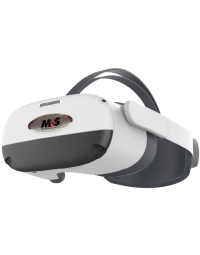
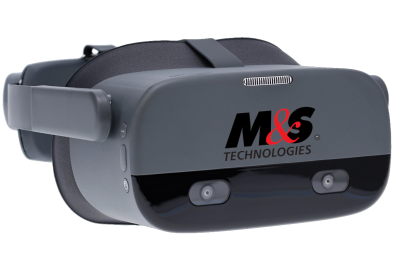
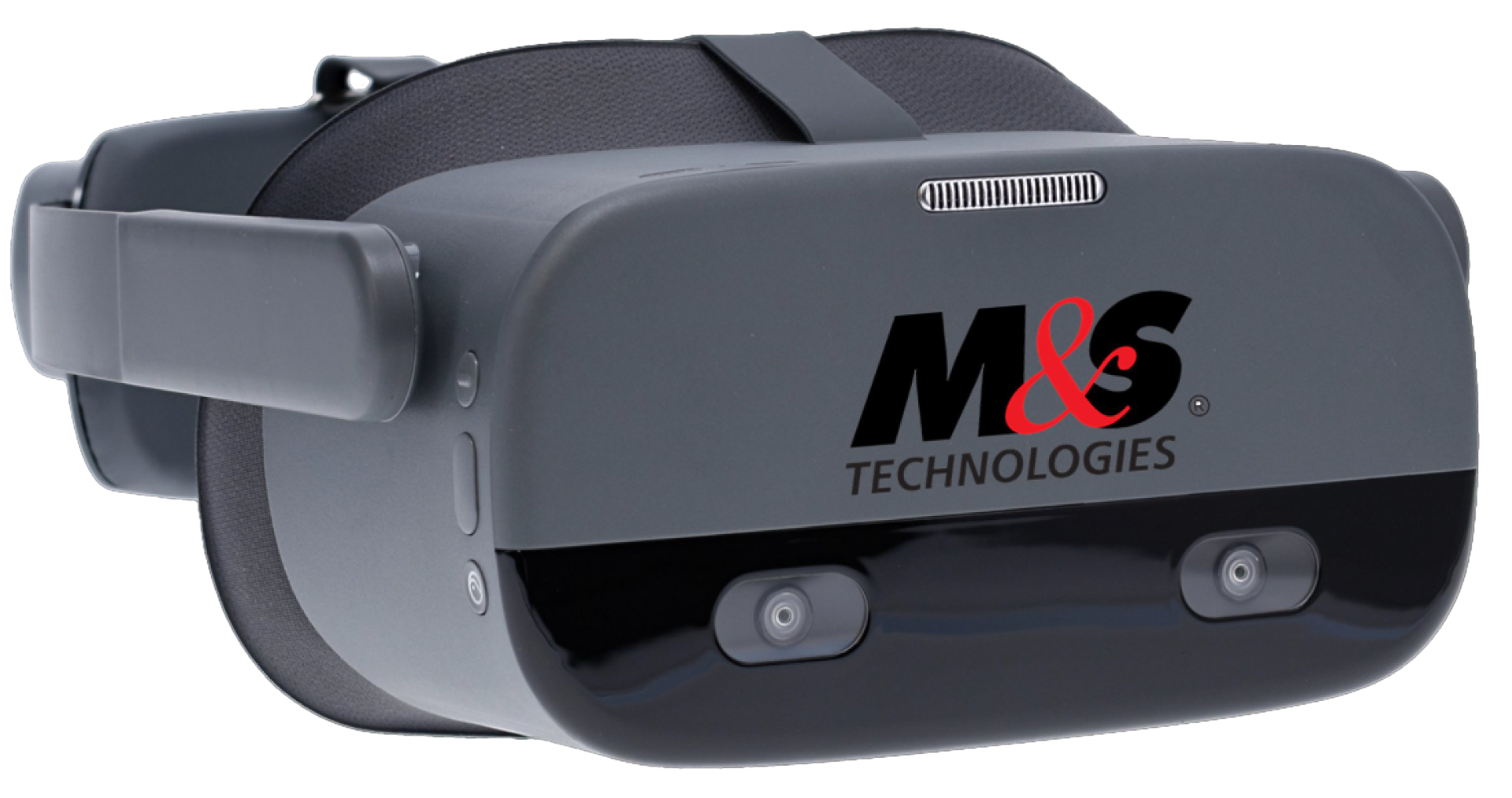
To eliminate the need for sitting in front of a big visual field machine, M&S technologies have introduced the smart system virtual reality headset for a better patient experience through the speed of testing.
Using Virtual Reality to Perform Visual Field Testing
Probably, you have heard of Virtual Reality technology or equipment used for games and entertainment. But these VR diagnostic devices are becoming a great tool for screening in medical settings. VR is an upcoming era, and perimetry is one of the fields of ophthalmology being advanced by it.
With the evolution of VR technology, eye care professionals can now use multi-functional diagnostic eye care screening devices for visual field testing. This novel technology has eliminated many of the issues experienced with the traditional visual field machine.
Why Is There A Need For VR Visual Field Testing?
Since the standard automated perimetry for evaluating a patient’s visual field is crucial information to monitor the progress, it’s not entertaining in any way. To avoid the discomfort and mild stress associated with taking the test, the researchers and manufacturers are trying to devise an alternative way for visual field testing. Let’s dive deeper into VR vision testing headsets along with critical eye tracking.
New Virtual Reality Vision Testing System
The smart VR headset, launched by M&S technologies, aims to provide eye care professionals with greater accuracy and increased flexibility in patient practice. It tests under 3 minutes per eye in multiple settings and can perform 10-2, 24-2, and 30-2 visual fields and a 45-second-per-eye QuickScreen. The headset has a built-in eye-tracking feature for fixation monitoring and can perform contour stereo testing.
In addition, VR diagnostics devices are lightweight, portable, affordable, comfortable, and require no internet connection. It features a changeable head strap and is cushioned for a convenient fit. It allows testing in a fully illuminated room without needing an eye patch (you can test with both eyes open). Moreover, results can be printed immediately after the test and feature an option to pause or restart as needed. There is also built a progression analysis system.
Hence, VR glasses, along with accompanying handheld controllers and tablet PC, are faster and more flexible than conventional testing methods. It’s an ultimate test-taking experience primarily great for screening younger patients.
Examination Procedure
During the test, the patient should sit comfortably or even in the case of more comfortable, lying down or even standing up is also acceptable. The subject puts on the VR headset and holds a wireless controller to respond to the visual stimuli. The administrator operates the headset from their system on the tablet computer. It shows a visual acuity test to which they react verbally. Then, the appropriate visual field testing method is started.
While the stimuli are displayed in the periphery, the patient keeps both eyes open and stares at the fixation point. The subject is considered to press the button on the wireless controller as soon as they see the stimuli. The live result of the test is displayed continuously, and the final report generates once the tests for both eyes are done.
The VR headset can be taken off after the tests, and it can also be removed during the test if the subject wants to take a break. Remember that the headset should not be off-center, tilted, too low, or too high. Pupil and focus distance should be adjusted with the rotating knobs to sharpen the image quality.
Advantages of VR Vision Testing System
From the experiments conducted at the visual field labs, the patients tolerated the VR test well compared to a Humphrey perimeter. As the subject is free to change position while testing, they reported a much more comfortable experience than the standard bowl perimetry.
More benefits are:
- Lightweight
- Portable
- Convenient
- Affordable, suitable for low resource settings
- Produces a shorter average time, reduced test-induced eye fatigue
- Acceptable for bed-ridden and patients who use wheelchairs
Conclusion
Given the importance of automated perimetry, leading manufacturers in technological advancements are introducing patient-friendly smart visual testing systems. The smart VR handset for visual field testing is more flexible than conventional location-constrained perimetry standards. It is convenient, cost-effective, and an effective alternative to Humphrey testing.